
Mouse Secondary Antibodies

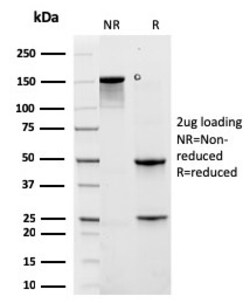
Biotium Cytokeratin 6A (KRT6A) (Basal Cell Marker)(rKRT6A/2100), Biotin conjugate, 0.1mg/mL
This MAb recognizes a protein of 56 kDa, identified as cytokeratin 6A (KRT6A). In humans, multiple isoforms of Cytokeratin 6 (6A-6F), encoded by several highly homologous genes, have distinct tissue expression patterns. Cytokeratin 6A is the dominant form in epithelial tissue. Cytokeratin 6 and 16 are expressed in keratinocytes, which are undergoing rapid turnover in the suprabasal region (also known as hyper-proliferation-related keratins). Cytokeratin 6 is found in hair follicles, suprabasal cells of a variety of internal stratified epithelia, in epidermis, in both normal and hyper-proliferative situations. Epidermal injury results in activation of keratinocytes, which express KRT6 and KRT16. KRT6 is strongly expressed in about 75% of head and neck squamous cell carcinomas. Primary antibodies are available purified, or with a selection of fluorescent CF Dyes and other labels. CF Dyes offer exceptional brightness and photostability. Note: Conjugates of blue fluorescent dy

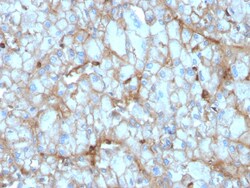
Biotium C1QA / Complement C1q A-Chain(C1QA/2954), 1mg/mL
Complement C1q A Chain (C1qa) is a subunit of C1q. C1q is composed of 6 polypeptide chains each of C1qa, C1qb, and C1qc. C1q is a component of the classical complement pathway, and thereby plays an important role in the immune response. Each C1q subunit contains an N-terminal collagen-like region and a C-terminal C1q globular domain. The presence of receptors for C1q on effector cells modulates its activity, which may be antibody-dependent or independent. Macrophages are the primary source of C1q, while anti-inflammatory drugs as well as cytokines differentially regulate expression of the mRNA as well as the protein. C1q deficiency is associated with lupus erythematosus and glomerulonephritis. Primary antibodies are available purified, or with a selection of fluorescent CF Dyes and other labels. CF Dyes offer exceptional brightness and photostability. Note: Conjugates of blue fluorescent dyes like CF405S and CF405M are not recommended for detecting low abundance targets,
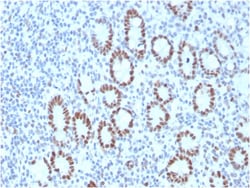
Biotium MSH6 (DNA Mismatch Repair Protein)(MSH6/3089), Biotin conjugate, 0.1mg/mL
The finding that mutations in DNA mismatch repair genes are associated with hereditary nonpolyposis colorectal cancer (HNPCC) has resulted in considerable interest in the understanding of the mechanism of DNA mismatch repair. Initially, inherited mutations in the MSH2 and MLH1 homologs of the bacterial DNA mismatch repair genes mutS and mutL were demonstrated at high frequency in HNPCC and were shown to be associated with microsatellite instability. A member of the mismatch repair family, GTBP (also designated MSH6), is an MSH2-related protein that binds to DNA containing G/T mismatches. Findings suggest that the mismatch-binding factor in human cells is composed of a heterodimer of GTBP and MSH2. Primary antibodies are available purified, or with a selection of fluorescent CF Dyes and other labels. CF Dyes offer exceptional brightness and photostability. Note: Conjugates of blue fluorescent dyes like CF405S and CF405M are not recommended for detecting low abundance targ
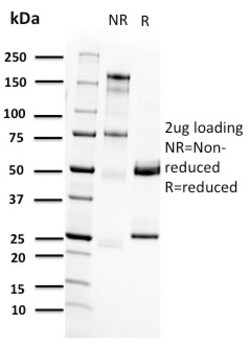
Biotium RET Proto-oncogene(RET/2662), CF568 conjugate, 0.1mg/mL
The Ret proto-oncogene is structurally related to the growing family of tyrosine kinase transmembrane receptors and is involved in GDNF signaling. RET expression is reported in several regions of the central nervous system; in the developing cranial nerve ganglia and a subset of cells within dorsal root ganglia, in motor neurons in the spinal cord and hindbrain, in neuro-retina and the growing tips of the renal collecting ducts in developing kidney. Alterations in RETgene are associated with diseases including papillary thyroid carcinoma, multiple endocrine neoplasia (type 2A and 2B), familial medullary thyroid carcinoma, and a congenital developmental disorder known as Hirschsprung's disease. Primary antibodies are available purified, or with a selection of fluorescent CF Dyes and other labels. CF Dyes offer exceptional brightness and photostability. Note: Conjugates of blue fluorescent dyes like CF405S and CF405M are not recommended for detecting low abundance targets,
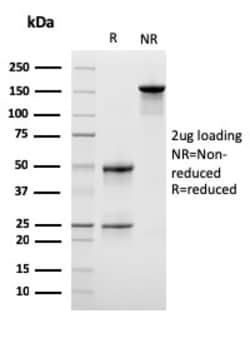
Biotium Lymphocyte Specific Protein 1 (LSP1) / pp52(LSP1/3042), 1mg/mL
LSP1 is a hematopoietic-expressed gene that encodes an F-actin-binding, leukocyte-specific (including B and T lymphocytes, granulocytes and macrophages), phosphoprotein. However, mRNA splice variants that do not encode the lympho-specific protein are expressed from this gene in nonlymphoid cell lines as well (myocytes, stromal cells and fibroblasts), suggesting pp52 has a divergent role in signal transduction. The pp52 (LSP1) locus maps to human chromosome 11p15. 5, which is implicated in tumor-related chromosomal translocations found in chronic lymphocytic leukemia. The pp52 promoter contains key elements that control transcriptional activity including an initiator specifying the unique 5' terminus of pp52 mRNA, tandem pairs of Ets and SP1 motifs, and a single C/EBP motif. LSP1 binds the cytoskeleton and has been implicated in affecting cytoskeletal remodeling in a variety of leukocyte functions, including cell motility and chemotaxis. Primary antibodies are available purifi
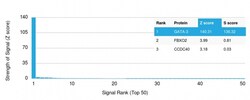
Biotium GATA-3 (Breast and Urothelial Marker)(GATA3/2441), 0.2mg/mL
GATA-3 is a zinc finger transcription factor and plays an important role in promoting and directing cell proliferation, development, and differentiation in many tissues and cell types. GATA-3 expression is primarily seen in breast and urothelial carcinomas. 'Therefore, GATA3 antibody can be useful in the identification of unknown primary carcinoma when carcinomas of the breast or bladder are a possibility. Primary antibodies are available purified, or with a selection of fluorescent CF Dyes and other labels. CF Dyes offer exceptional brightness and photostability. Note: Conjugates of blue fluorescent dyes like CF405S and CF405M are not recommended for detecting low abundance targets, because blue dyes have lower fluorescence and can give higher non-specific background than other dye colors.

Biotium Luteinizing Hormone / Choriogonadotropin Receptor (LHCGR) (LHCGR/1416), CF568 conjugate, 0.1mg/mL
This antibody recognizes a protein of 78-85 kDa, which is identified as luteinizing hormone/choriogonadotropin receptor. Luteinizing hormone plays a role in spermatogenesis and ovulation by stimulating the testes and ovaries to produce steroids. Choriogonadotropin production in the placenta maintains estrogen and progesterone levels during the first trimester of pregnancy. Ovaries and testes abundantly express luteinizing hormone/choriogonadotropin receptor (LHCGR) as a seven transmembrane, G protein-coupled receptor glycoprotein. LHCGR influences the protective effect of pregnancy and Gonadotropin against breast cancer. The expression of LHCGR on breast carcinoma correlates in part to the degree of tumor differentiation. LHCGR -positive breast tumors occur more frequently in tumors with greater cell differentiation in premenopausal women.Primary antibodies are available purified, or with a selection of fluorescent CF Dyes and other labels. CF Dyes offer exceptional brigh
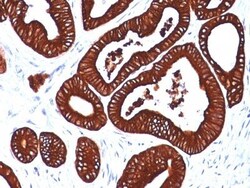
Biotium Cytokeratin 19(BA17), CF740 conjugate, 0.1mg/mL
This Ab reacts with the rod domain of human cytokeratin 19 (CK19), a polypeptide of 40 kDa. CK19 is expressed in sweat gland, mammary gland ductal and secretory cells, bile ducts, gastrointestinal tract, bladder urothelium, oral epithelia, esophagus, and ectocervical epithelium. Anti-CK19 reacts with a wide variety of epithelial malignancies including adenocarcinomas of the colon, stomach, pancreas, biliary tract, liver, and breast. Perhaps the most useful application is the identification of thyroid carcinoma of the papillary type, although 50%-60% of follicular carcinomas are also labeled. Anti-CK19 is a useful marker for detection of tumor cells in lymph nodes, peripheral blood, bone marrow and breast cancer.Primary antibodies are available purified, or with a selection of fluorescent CF Dyes and other labels. CF Dyes offer exceptional brightness and photostability. Note: Conjugates of blue fluorescent dyes like CF405S and CF405M are not recommended for detecting low
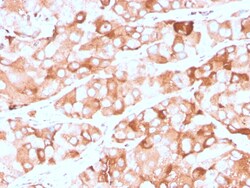
Biotium Prolactin Receptor (hPRL Receptor)(rPRLR/742), CF740 conjugate, 0.1mg/mL
Recognizes a protein of 70 kDa, identified as prolactin receptor. Prolactin is a pituitary hormone involved in the stimulation of milk production, salt and water regulation, growth, development and reproduction. The initial step in its action is the binding to a specific membrane receptor (prolactin receptor), which belongs to the superfamily of class 1 cytokine receptors. The function of the prolactin receptor is mediated, at least in part, by two families of signaling molecules: Janus kinases and signal transducers and activators of transcription. Primary antibodies are available purified, or with a selection of fluorescent CF Dyes and other labels. CF Dyes offer exceptional brightness and photostability. Note: Conjugates of blue fluorescent dyes like CF405S and CF405M are not recommended for detecting low abundance targets, because blue dyes have lower fluorescence and can give higher non-specific background than other dye colors.
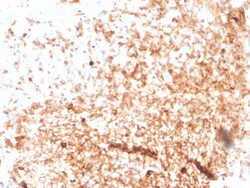
Biotium Human IgM (Immunoglobulin Mu Heavy Chain) (B-Cell Marker)(rIGHM/3802), Biotin conjugate, 0.1mg/mL
Recognizes a protein of 75 kDa, identified as mu heavy chain of human immunoglobulins. It does not cross-react with alpha (IgA), gamma (IgG), epsilon (IgE), or delta (IgD), heavy chains, T-cells, monocytes, granulocytes, or erythrocytes. Monomeric IgM is expressed as a membrane bound antibody on the surface of B cells and as a pentamer when secreted by plasma cells. IgM antibody is prominent in early immune responses to most antigens. Aberrant levels are associated with immune deficiency states, hereditary deficiencies, myeloma, Waldenstrom's macroglobulinemia, chronic infection and hepatocellular disease. This MAb is useful in the identification of leukemias, plasmacytomas, and certain non-Hodgkin's lymphomas. The most common feature of these malignancies is the restricted expression of a single heavy chain class. Demonstration of clonality in lymphoid infiltrates indicates that the infiltrate is clonal and therefore malignant. Primary antibodies are available purified, or w
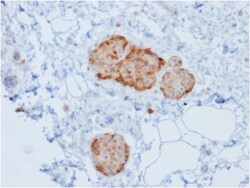
Biotium Chromogranin A / CHGA (Neuroendocrine Marker)(rCHGA/777), CF488A conjugate, 0.1mg/mL
Chromogranin A is present in neuroendocrine cells throughout the body, including the neuroendocrine cells of the large and small intestine, adrenal medulla and pancreatic islets. It is an excellent marker for carcinoid tumors, pheochromocytomas, paragangliomas, and other neuroendocrine tumors. Co-expression of chromogranin A and neuron specific enolase (NSE) is common in neuroendocrine neoplasms. Reportedly, co-expression of certain keratins and chromogranin indicates neuroendocrine lineage. The presence of strong anti-chromogranin staining and absence of anti-keratin staining should raise the possibility of paraganglioma. The co-expression of chromogranin and NSE is typical of neuroendocrine neoplasms. Most pituitary adenomas and prolactinomas readily express chromogranin. Primary antibodies are available purified, or with a selection of fluorescent CF Dyes and other labels. CF Dyes offer exceptional brightness and photostability. Note: Conjugates of blue fluorescent dyes
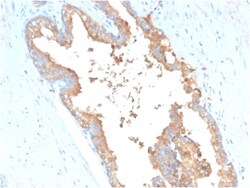
Biotium Transferrin (Early Marker of Oligodendrocytes)(TF/3001), CF568 conjugate, 0.1mg/mL
Iron (Fe) is a tightly metabolically controlled mineral and growth factor present in all living cells. Iron not bound in erythrocyte hemoglobin is transported by transferrin (Tf), the iron transport protein of vertebrate serum. The transferrin protein contains two homologous domains, each of which contain an Fe-binding site. The majority of transferrin is synthesized in the liver and secreted into the blood, but it is also produced in lower amounts in testis and brain as well as in oligodendrocytes, where transferrin is an early marker of oligodendrocyte differentiation. From the blood, transferrin is internalized by erythroblasts and reticulocytes upon binding the transferrin receptor (TfR), also designated CD71, through a system of coated pits and vesicles. After Fe release, transferrin is returned to the extracellular medium, where it can be reused. Defects in the transferrin gene results in atransferrinemia, a rare autosomal recessive disorder characterized by microcytic
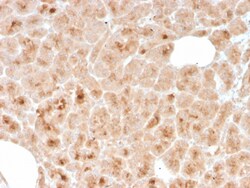
Biotium LMO2 (B-Cell Marker)(rLMO2/1971), CF740 conjugate, 0.1mg/mL
The LMO2 protein has a central and crucial role in hematopoietic development and is highly conserved. It has a particular function in normal and lymphatic endothelial cells involving the regulation of angiogenesis and lymph-angiogenesis. Immunohistochemical studies have also demonstrated expression of LMO2 in both normal germinal center B-cells and germinal center-derived B-cell lymphomas, including follicular lymphoma and diffuse large B-cell lymphoma. The use of anti-LMO2 is valuable as a tool in the identification of lymphomas of B-cell origin. LMO2 is useful in differentiating follicular lymphoma (LMO2 ) from nodal marginal zone lymphoma (LM02-). It also is positive in Hodgkin's and Burkitt's lymphomas. Primary antibodies are available purified, or with a selection of fluorescent CF Dyes and other labels. CF Dyes offer exceptional brightness and photostability. Note: Conjugates of blue fluorescent dyes like CF405S and CF405M are not recommended for detecting low abun
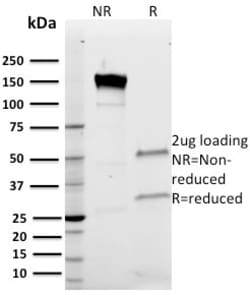
Biotium Band III(Q1/156), 0.2mg/mL
Band 3, also designated AE1, is an erythrocyte membrane glycoprotein that contributes to cell stuctural integrity and mediates exchange of chloride and bicarbonate across the phospholipid bilayer. The diverse functions of the approximately 900 amino acid protein are mediated by two distinct domains. The amino-terminal domain, also known as cdb3 for cytoplasmic domain of erthrocyte membrane band 3, acts as an attachment site for the erythrocyte skeleton by binding ankyrin. The carboxy-terminal, membrane-associated domain carries out exchange transport of anions. Degradation of band 3 can generate an aging antigen known as senescent cell antigen, or SCA, which is expressed on old cells and marks them for removal by the immune system. An isoform of band 3, which lacks the first 65 amino acids and does not bind ankryin, is expressed in kidney. Primary antibodies are available purified, or with a selection of fluorescent CF Dyes and other labels. CF Dyes offer exceptional bright
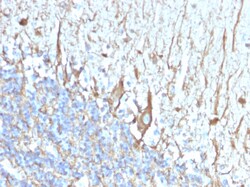
Biotium Neurofilament (H+L) (Neuronal Marker)(2F11), CF568 conjugate, 0.1mg/mL
This MAb reacts with a 200 kDa and 68 kDa protein, identified as heavy and light sub-units of neurofilaments (NF-H NF-L). Neurofilaments make up the main structural elements of axons and dendrites and are found in neurons, peripheral nerves, and sympathetic ganglion cells. Neurofilaments consist of three major subunits with molecular weights of 68 kDa (NF-L), 160 kDa (NF-M) and 200 kDa (NF-H). Anti-neurofilament stains a number of neural, neuroendocrine, and endocrine tumors. Neuromas, ganglioneuromas, gangliogliomas, ganglioneuroblastomas, and neuroblastomas stain positively for anti-neurofilament. Neurofilaments are also present in paragangliomas as well as adrenal and extra-adrenal pheochromocytomas. Carcinoids, neuroendocrine carcinomas of the skin, and oat cell carcinomas of the lung also express neurofilament. Primary antibodies are available purified, or with a selection of fluorescent CF Dyes and other labels. CF Dyes offer exceptional brightness and photostability.